
A full tub on the third floor might not be empty until days later when a renter in the basement opens a closet and sees water dripping from the top of a bookshelf. By that time, the tub’s faucet is off and the only sign of the leak might be a slightly damp towel and a chunk of baseboard that has expanded. Yet water mitigation technicians still have to find their way back through the hallway, into the apartment kitchen, and past rooms where tenants live to track down the original loss.
Third Floor: Working in the Unit Where the Leak Occurs
In the apartment where the leak originated, the water mitigation technician inspects the area around the tub, toilet, and sink. The technician also looks along the wall where pipes run into the unit. The source of the water could be a cracked supply line, a loose overflow flange, or a shower curtain draped over the side of the tub. The technician also looks for telltale signs like a water stain running along the inside edge of the bathroom doorway.
Before pulling up any vinyl plank flooring or taking out baseboards, the technician moves wet towels and plastic laundry baskets out of the way. If there is moisture under the floor, a technician can use air movers and dehumidifiers, and there is a good rundown at https://cdc.gov/mold-health, next to the bathroom while the bedroom remains open for the tenant to use. Tenants need to know that their belongings will be protected from dirt and traffic as the technicians work. A runner from the front door to the living room will keep muddy shoes from walking across the living room rug.
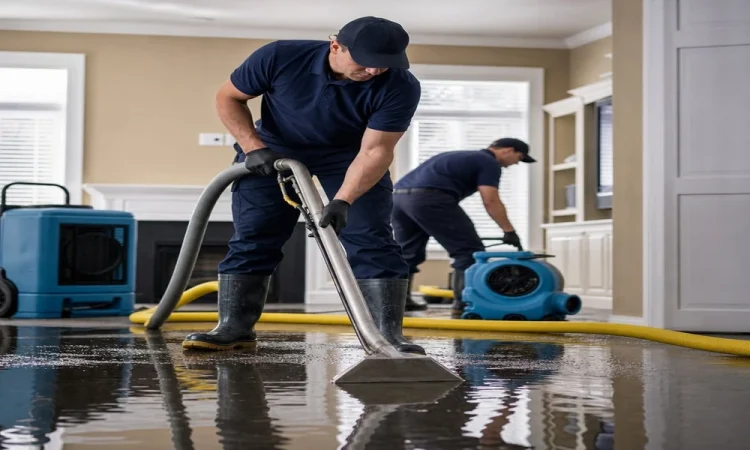
Air movers and dehumidifiers drying the floor near an apartment bathroom
Before the techs start their machines, they photograph the source unit, take moisture readings, and document any damaged surfaces. These records make it possible to distinguish between damage in the unit where the water leaked from and damage in the units below it.
Second Floor: Entering the Ceiling Space in the Middle Unit
The middle unit might be the least visibly damaged but the trickiest to dry. A faint yellow spot next to a ceiling light fixture can mean that there is insulation wet enough to darken the wood joists above it. Water mitigation specialists do not always wait for the ceiling to sag and fall into the dining room. Instead, they can cut out the wet part of the ceiling.
Here are some things to check in this unit:
- Electrical lines often run above the ceiling. They might pass near a light fixture or go into a junction box above the dining room.
- Insulation absorbs water, and can stay wet against wooden joists even if the ceiling looks fine.
- Water travels (more info), and water might be seeping behind the kitchen cabinets. It can also flow to another wall in the same room.
- Dust barriers protect everything, from dishes on plates to blenders on counters to the box of cereal left on the counter next to the toaster.
Electrical equipment exposed to moisture needs inspection before placing air movers or dehumidifiers near it. If there is dirty water or wet debris in the ceiling, containment prevents dust from getting into the hallway or a bedroom where someone lives.
Ground Floor: Locating Where the Water Ends Up
The third unit might have a few drops on the window sill or a warped shelf in the closet. There might be a coffee ring on a notebook that has been spread out by water that landed on the desk. It might look like the ceiling is okay even though water is still above it. A map of moisture readings throughout the room will let the technicians identify how far the water went without cutting a large section of ceiling.
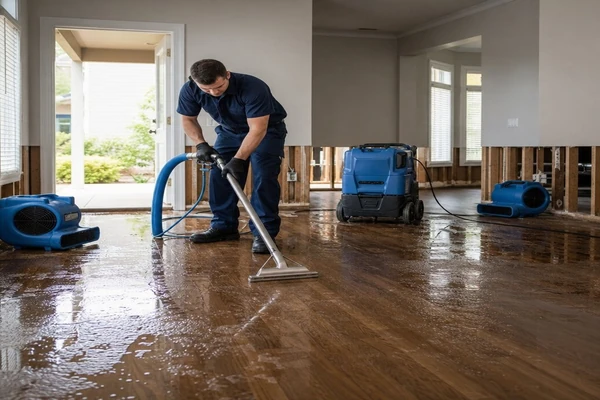
Technician mapping moisture readings in a ground-floor apartment
Renters might want to file claims for their personal property like furniture, electronics, or clothes. Photos should show every piece of personal property that was damaged in the location where it was found, including a cardboard box that got soaked under the rod in the closet. Property owned by the building like drywall and carpet will be documented separately.
Keeping People in the Units While Drying
Sometimes it is harder to get people to leave the units than it is to dry them. One person works night shifts. Another has a baby who sleeps during the day. The apartment where the leak started might have only one bathroom. Giving written notice of work times and checking equipment daily will keep surprises at bay. This is especially true if the dehumidifier has to sit near the dining room in the second apartment.
Before the Ceilings Are Replaced
When water leaks between floors, water mitigation technicians should start in the apartment where the leak came from and move to the lowest level where water caused damage. Each ceiling space needs to be examined before repair work begins. Clear documentation for each unit, properly dried structural components, and careful coordination will prevent contractors from having to tear out new drywall if a wet joist or a shared electrical chase is discovered after the fact.