
The light over the kitchen sink dims for a split second when the microwave starts. One bathroom outlet feels a little warm after the hair dryer runs. A basement breaker trips once a month, gets flipped back on and is forgotten. None of these seems urgent on its own. Together, they are often the first signs that a home’s electrical system has fallen behind how the household uses power today.
This mismatch is common in Mount Olive Township, where many neighborhoods were built between the 1960s and the 1980s and still have much of their original wiring, panels and devices. Homeowners who want those early clues traced to their source often call an electrician in Flanders such as the locally owned team at Triple A Electrical, which handles inspections, wiring, panel work and repairs across Morris, Sussex and Warren counties.
Fire safety officials separate symptoms that can wait a few days from symptoms that can’t. A Massachusetts state fire safety fact sheet says to call the fire department right away for sparks, a sizzling or buzzing sound, or a burning smell. It says to call a licensed electrician soon for breakers that trip often, dim or flickering lights, warm switches or outlets, loose plugs, or shocks stronger than static. Knowing which group a symptom belongs to is the most useful thing a homeowner can learn.
Why Do Older Homes Struggle With Modern Loads?
A kitchen wired in 1972 was built for a toaster, a refrigerator and perhaps an electric can opener. Today the same counter may hold an air fryer, a coffee maker, a microwave and a kettle, all on one or two circuits. Add a home office in a spare bedroom and a space heater under the desk in January, and some circuits are carrying far more than they were ever designed for.
Older homes also tend to lack protections that are standard now. Two-prong outlets have no ground path. Many bathrooms, kitchens and garages have no ground fault protection. Bedroom circuits almost never have arc fault breakers, which are designed to detect the kind of sparking that can start a fire inside a wall.
A breaker that trips is doing its job. Repeated trips on the same circuit mean something is overloaded or failing. Putting in a larger breaker so the tripping stops is one of the most dangerous fixes a homeowner can try, because the wire behind it doesn’t get any bigger.
What Your Senses Can Pick Up
Electrical trouble rarely announces itself loudly, but it usually leaves clues:
- Smell: a hot plastic or faintly fishy odor near an outlet, switch or the panel, which can mean insulation is overheating
- Sound: buzzing, crackling or sizzling from a device or the breaker box
- Touch: cover plates that feel warm, or plugs that slip out of a receptacle with almost no effort
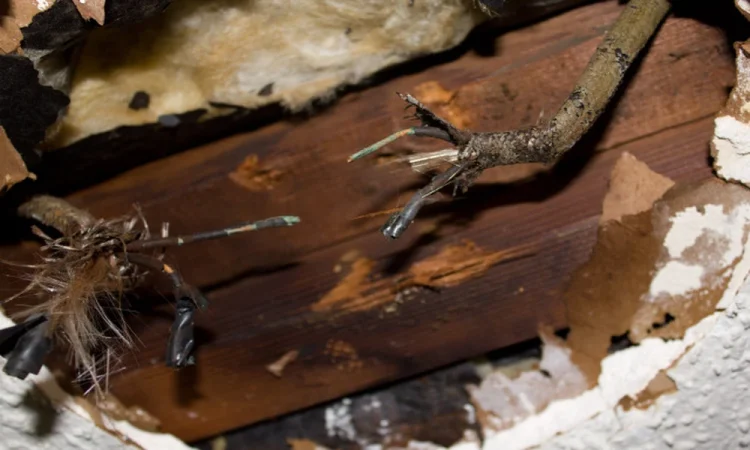
- Sight: brown or black scorch marks, melted plastic, or bulbs that burn out far faster than they should
Flickering is worth a closer look because where it happens tells you a lot. If only one fixture or one circuit flickers, the cause is often a loose connection at a switch, outlet or splice. If lights throughout the house dim or get brighter when a large appliance starts, the problem may be a loose neutral at the panel or the service connection. That fault can push abnormal voltage to everything plugged in, and it should be checked quickly.
The Aluminum Wiring Question
Homes built roughly between 1965 and 1973 sometimes have aluminum branch circuit wiring instead of copper. Aluminum expands and contracts more than copper as it heats and cools, and it oxidizes at connection points. Over decades, connections at outlets, switches and light fixtures can loosen and overheat.
The U.S. Consumer Product Safety Commission’s guide to repairing aluminum wiring warns that failing aluminum connections seldom give obvious warning signs. It recommends permanent repairs rather than quick fixes. The options are replacing the wiring with copper or attaching short copper leads to the aluminum wires using specific approved connectors. The commission considers swapping in aluminum-rated switches and outlets on their own to be an incomplete repair.
Checking for aluminum wiring is often simple. In an unfinished basement or attic, look at the printing on the outer cable jacket. Markings such as “AL” or “ALUMINUM” are the giveaway. Larger aluminum cables feeding a range or the service entrance are a different matter and are generally not the concern.
Panels That Deserve a Second Look
The panel is where many hidden problems collect. Old fuse boxes are still common in some North Jersey homes, often with fuses rated higher than the wire can handle. Some breaker panels from the 1960s and 1970s have a poor track record and are often flagged in home inspections.
Basement conditions matter too. North Jersey basements tend to be damp, and moisture can rust breakers, bus bars and the panel enclosure. Rust streaks on the inside of the panel door are a sign to have it checked.
A finished basement can also create problems. Code requires a clear working space in front of the panel, roughly 30 inches wide and 36 inches deep. Panels boxed in behind shelving, drywall or a bar during a remodel are harder to service and harder to shut off in an emergency.
Another common finding is a double-tapped breaker, where two wires share a terminal designed for one. It usually means someone added a circuit without adding a breaker space.
How Does a Home Electrical Inspection Work?
A thorough inspection usually starts at the panel with the cover off. The electrician looks at wire sizes, breaker ratings, signs of heat damage and how the grounding is connected. Many also use a thermal camera, which can spot a connection running hotter than its neighbors before it fails.
From there, outlets are tested for proper grounding and correct polarity, ground fault outlets are tripped and reset, and smoke and carbon monoxide alarms are checked. The alarms matter for more than safety. When a New Jersey home is sold, the seller needs a certificate showing compliance with the state’s smoke alarm, carbon monoxide alarm and fire extinguisher requirements. Finding problems early makes that step much easier.
Small Clues Are Worth Writing Down
Most electrical fires in homes don’t start without warning. They grow out of loose connections, overloaded circuits and worn devices that gave small signals for months. The homeowner who notes which breaker trips, which room it serves, what was running at the time and how often it happens gives an electrician a head start on the diagnosis.
A habit like that costs nothing. It turns vague worries into specific information, and it means any repair is aimed at the real cause rather than the symptom you happened to notice.